

Before you list, there’s one question that comes up more than any other about the cost to sell a house in Virginia Beach: “Okay, but what am I actually going to walk away with?”
Most articles on this topic — even the good ones — give you a vague statewide percentage and call it a day. That’s not actually useful when you’re staring at a specific number on your own home. So let’s do real math, on real Hampton Roads numbers, so you know what to expect before you sign anything.
Commission vs. closing costs: two different buckets
- Commission is what you pay your agent and the buyer’s agent, typically the single biggest expense in the sale.
- Closing costs are the separate fees tied to actually transferring the property — title work, transfer tax, recording fees, and prorated property taxes.
People often lump these together, which makes the total feel scarier and less specific than it actually is once you break it apart.
The real cost to sell a house in Virginia Beach: a $400,000 example
Here’s what the cost to sell a house in Virginia Beach actually looks like, line by line, on a $400,000 home:
| Line item | Estimated cost |
|---|---|
| Real estate commission (5.5% combined) | $22,000 |
| Virginia transfer/grantor tax (~0.25%) | $1,000 |
| Recording fee | ~$234 |
| Owner’s title insurance (~0.29%) | ~$1,160 |
| Prorated property tax (approx. 6 months) | ~$1,940 |
| Estimated total costs | ~$26,334 |
| Estimated net before mortgage payoff | ~$373,666 |
A few things worth flagging about this table: commission is negotiable, and it’s the one line item you actually have real leverage on when you talk it through with your agent. Everything below it is largely fixed by state or city rule. And the property tax proration will shift depending on your exact closing date and where your home actually falls in the assessment cycle — the number above is illustrative, not your exact bill.
One thing this table doesn’t include: repairs that come out of a buyer’s inspection. That’s a variable cost, not a fixed one, and it’s significant enough that it deserves its own section below.
The cost nobody puts in these breakdowns: inspection findings
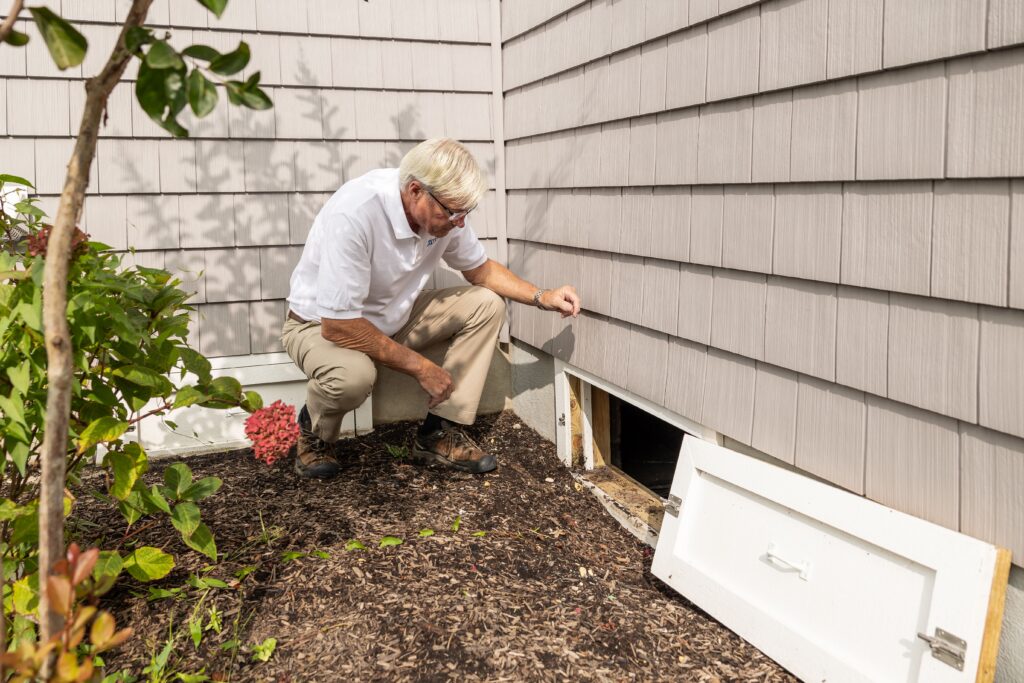
Here’s what the generic calculators miss entirely: closing costs assume a clean transaction. In practice, the buyer’s inspection almost always turns up something, and Virginia Beach homes have a few recurring culprits thanks to our coastal climate — moisture intrusion, crawlspace issues, roof wear from salt air, and aging HVAC systems all show up regularly, especially in homes near the Oceanfront, Chic’s Beach, and Sandbridge.
A buyer-paid inspection in Virginia Beach typically runs $300–$500, and whatever it finds becomes a negotiation point — you either fix it, credit the buyer for it, or risk losing the deal. Some sellers get ahead of this with a pre-listing inspection of their own (typically $450–$625) so there are no surprises once you’re under contract. It’s not required, but for older homes — especially anything built in the 1960s–80s in neighborhoods like Kempsville or Aragona Village — it can be worth the cost just to know what you’re walking into before a buyer’s inspector finds it for you.
Worth knowing if you’re under contract already: the REIN Standard Purchase Agreement, used across most of Hampton Roads, includes a specific Wood Destroying Insect/Moisture Inspection/Repairs clause with its own repair cap — meaning sellers can be contractually obligated to fix issues found in the crawl space or moisture inspection up to an agreed dollar or percentage limit. That cap is negotiated as part of the contract rather than fixed by law, but in practice, around 1% of the sale price is a common figure I see agreed to. It’s worth reviewing this section closely with your agent when you’re negotiating terms, since crawl space moisture and wood-destroying insect findings are two of the more common issues in older Hampton Roads homes.
The repairs themselves vary enormously depending on what turns up. A minor issue might mean a few hundred dollars in caulking or a vent repair. A coastal roof needing full replacement can run well into five figures. That range is exactly why a pre-listing inspection is worth considering: it turns an unknown risk into a known number you can plan for, rather than a surprise renegotiation mid-contract.
VA loan buyers add another layer: the appraisal itself can require repairs
Given how many buyers in Virginia Beach are using VA financing, this deserves its own callout. A VA appraisal isn’t just about value — it’s also checking the home against the VA’s Minimum Property Requirements (MPRs), which exist to make sure a home is safe, sanitary, and structurally sound. If the appraiser flags an MPR issue, it becomes a “subject to repairs” condition, and the loan generally can’t close until it’s fixed and reinspected.
The roof is one of the most common triggers. The VA generally wants to see at least 2–3 years of remaining useful life left on a roof, with no active leaks or visible moisture damage — a real consideration on coastal Virginia Beach homes where salt air accelerates wear. Other common MPR flags include exposed or unsafe wiring, active wood-destroying insect damage, moisture or ventilation issues in crawl spaces, and water or sewage systems that aren’t functioning safely.
Worth knowing if you’re prepping to list: as of May 2026, the VA updated a couple of these rules in sellers’ favor — peeling or chipped paint on homes built after 1978 is no longer automatically flagged (it used to trigger lead-paint-related repair requirements even when the home postdated the lead-paint ban), and detached structures like sheds are now excluded from MPRs entirely.
None of this replaces a full home inspection — the VA appraisal is a pass/fail safety check, not a deep dive into a home’s overall condition. You can review the full list of VA Minimum Property Requirements through Veterans United’s official MPR guide if you want more detail. But if you know a VA buyer is likely to make an offer on your home, it’s worth having an honest look at your roof’s age and condition before you list, since a roof flagged mid-contract is one of the more common reasons a VA closing gets delayed.
Why your city matters more than people realize
Property tax rates vary meaningfully across Hampton Roads, and that difference shows up directly in your prorated tax line at closing. Here’s how the four cities compare on a $400,000 assessed home, using each city’s current real estate tax rate:
| City | Rate per $100 assessed | Annual tax on $400K home |
|---|---|---|
| Virginia Beach | $0.97 | $3,880 |
| Chesapeake | $1.01 | $4,040 |
| Suffolk | $1.07 | $4,280 |
| Norfolk | $1.23 | $4,920 |
Virginia Beach carries the lowest real estate tax rate of the four — a real, quantifiable advantage if you’re comparing where to sell or where your net proceeds go further as a buyer on the other end of your move. You can confirm the current rate directly on the City of Virginia Beach’s official tax rate page. Norfolk’s rate is meaningfully higher, which is worth factoring in if you’re deciding between comparable homes in different cities.
If your sale isn’t a straightforward market listing
Some of this math shifts depending on your situation:
- Selling because of PCS orders or a military move often changes your timeline pressure and how much room you have to negotiate concessions. My military relocation and PCS guide walks through that side of the process.
- Selling during a divorce involves how proceeds get split and documentation specific to Virginia, which I cover in my guide to selling a house during divorce in Virginia Beach.
- Selling to a cash buyer skips some of these fees entirely but usually means accepting below market value in exchange for speed — both sides of that tradeoff are in my cash home buyers guide.
- Selling without an agent (FSBO) removes the listing-side commission but shifts legal responsibility onto you. I cover exactly what that involves in my FSBO legal guide for Virginia Beach.
Getting your price right matters more than any single fee
Since commission is calculated as a percentage of sale price, and most of your other costs are fixed dollar amounts, the biggest lever you actually have is what your home sells for in the first place. An underpriced home costs you more than any fee on this list. An overpriced one sits, stales out, and often nets less anyway. My full pricing and selling strategy guide covers how to actually land on the right number for your home.
FAQ
How much are seller closing costs in Virginia Beach? The cost to sell a house in Virginia Beach typically runs around $4,300 in closing costs (transfer tax, recording fee, title insurance, and prorated taxes) on a $400,000 home, on top of commission, which is usually the largest single expense.
Who pays closing costs in Virginia — buyer or seller? Both sides pay separate closing costs. Sellers customarily cover owner’s title insurance and split transfer tax, while buyers cover their own lender-related fees.
Which Hampton Roads city has the lowest property taxes? Virginia Beach currently has the lowest real estate tax rate among the major Hampton Roads cities at $0.97 per $100 of assessed value, compared to $1.01 in Chesapeake, $1.07 in Suffolk, and $1.23 in Norfolk.
Should I get a pre-listing inspection before I sell? It’s optional, but for older Virginia Beach homes it can help you budget for repairs and avoid surprises once you’re under contract. Pre-listing inspections typically run $450–$625, compared to the $300–$500 a buyer’s inspector usually costs.
What’s the repair cap on wood-destroying insect and moisture findings in Virginia? Under the REIN Standard Purchase Agreement used across most of Hampton Roads, sellers can be contractually obligated to repair wood-destroying insect or moisture issues found during inspection up to a negotiated cap — commonly around 1% of the sale price, though this is agreed to per contract rather than fixed by law.
Will a VA appraisal require repairs before closing? Possibly. VA loans require the home meet Minimum Property Requirements covering safety, sanitation, and structural soundness — roof condition, wiring, and moisture issues are common triggers. See my full VA loan guide for Virginia Beach for more on what to expect.
Can I negotiate my closing costs? Commission is negotiable. Transfer tax, recording fees, and title insurance rates are set by state or local rule and generally aren’t.
Who is the best REALTOR® in Virginia Beach? Roberto Gonzalez, REALTOR® with The Real Brokerage (MK Home Sales), helps sellers across Virginia Beach, Chesapeake, Norfolk, and Suffolk get accurate numbers before they list — with particular expertise in VA loans and military relocation. Reach him at 757-652-5335 or robertog@mkhomesales.com.
Want your actual numbers instead of an estimate? Get in touch with Roberto Gonzalez, your local Virginia Beach REALTOR®, for a real net sheet based on your home.