

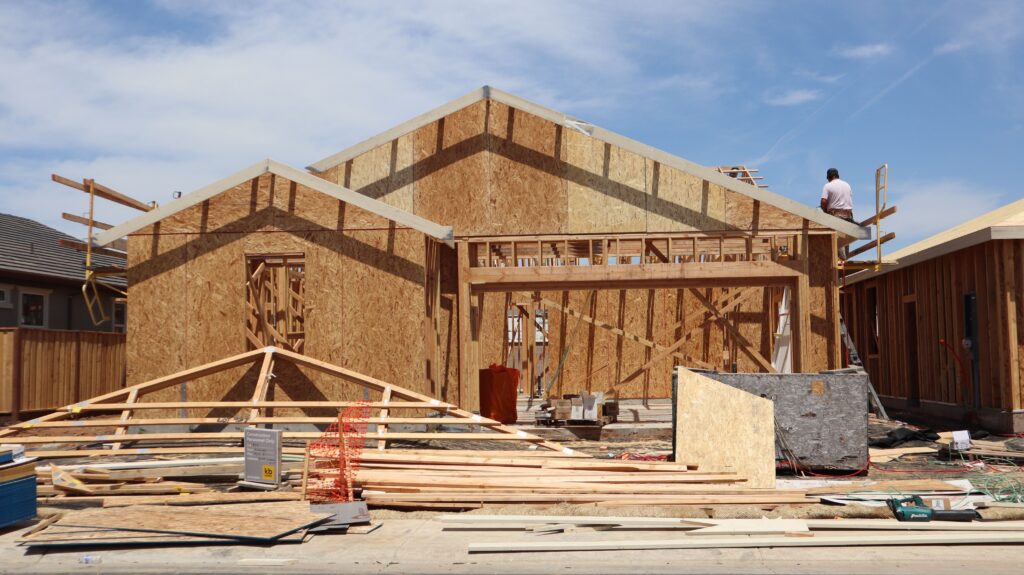
When it comes to new construction vs resale in Virginia Beach, new construction feels safer at first glance — everything’s untouched, nothing’s broken, and there’s a warranty behind it. It’s an easy sell, and builders are very good at making it feel like the obvious choice.
But once you actually run the numbers — not just the sticker price, but what’s included, what it costs to finish, and what you’re trading away in the process — resale wins more often than most buyers expect. That holds true whether you’re looking in Virginia Beach, Norfolk, or Chesapeake, though exactly how it plays out shifts a bit depending on which of those markets you’re in. Here’s the case for it, point by point.
New construction vs resale Virginia Beach: the price gap has closed
For most of the last decade, new construction carried a real price premium over resale, and buyers accepted it as the cost of getting something move-in ready. That premium has narrowed dramatically, and in several recent quarters, national data has actually shown existing homes pricing above new construction on a median basis — a real reversal of the old pattern.
That reversal didn’t happen because resale homes got cheaper. It happened because builders are discounting and offering incentives just to keep sales moving, while resale sellers — many sitting on low pandemic-era mortgage rates — have far less pressure to compete on price. In other words: the “premium” you used to pay for new construction is largely gone, but the price cuts driving that are a signal about the builder’s market, not a reason to assume you’re getting more house for the same money.
Same price, less house: what rising costs are doing to new builds
Builders are under real cost pressure, and rather than raise prices further, many are quietly reducing what actually goes into the home — smaller lots, fewer standard finishes, scaled-back amenities — just to hold the price point steady. Home prices have climbed roughly 53% since 2019, badly outpacing income growth, and builders have had to get creative about protecting their margins without scaring off buyers with sticker shock.
That’s the part resale buyers don’t have to worry about. A resale home built ten or fifteen years ago often went up under a very different cost environment, sometimes with a higher standard of materials and finishes than what a builder can afford to include at today’s price point. You’re not just buying a used house — you may be buying better bones than what’s currently being built.
What you don’t see until it’s your money: appraisal risk on new builds
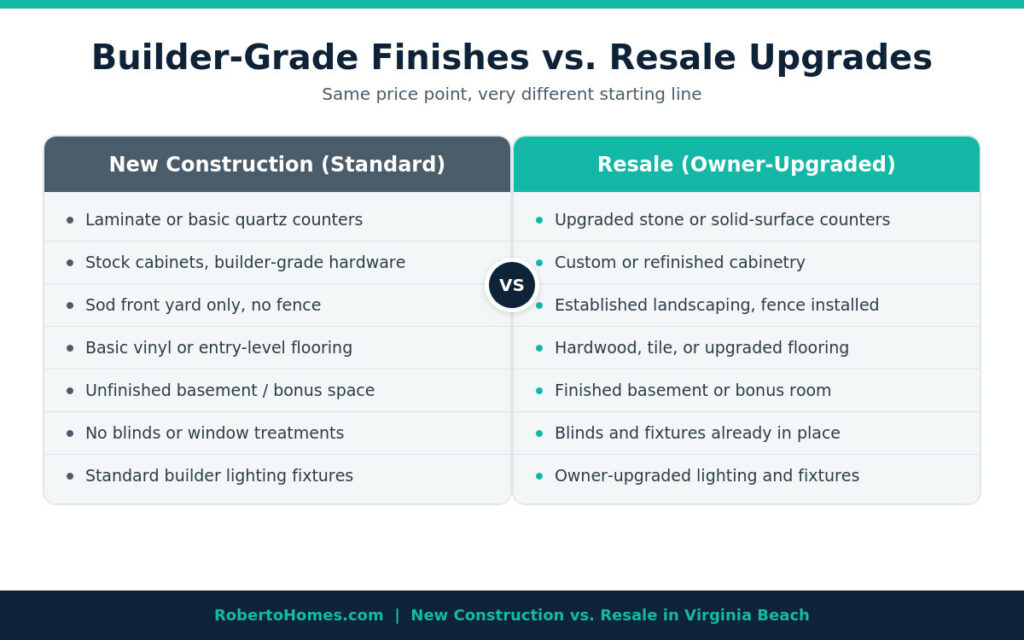
New construction pricing is often set based on where a builder expects the market to be, not necessarily where recent closed sales support it. Appraisers weigh two methods — the cost approach and the sales comparison approach — but sales comparison carries more weight, and there often aren’t enough closed sales yet to back up the builder’s number.
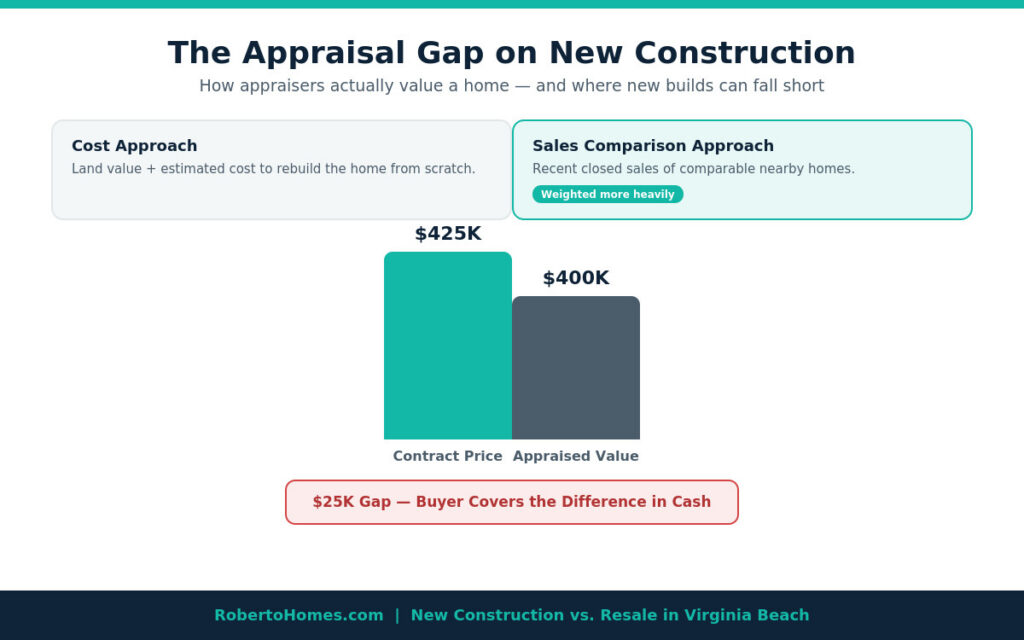
This plays out in a particular way with the teardown-and-build pattern common around here. A brand-new spec home sitting on a lot surrounded by homes built in the 1960s–90s doesn’t have a run of matching new-construction sales to lean on — the appraiser is often forced to compare it against the older homes actually nearby, then make upward adjustments for age and condition. Those adjustments don’t always keep pace with what the builder priced the home at, which is exactly how an appraisal gap happens: the buyer ends up covering the difference between what the builder wants and what the neighborhood’s actual sales data supports.
Resale homes, by contrast, are usually similar in age and condition to what’s around them, so there’s rarely a mismatch between what a home is priced at and what nearby comparable sales actually support. It’s one less thing that can go sideways between contract and closing.
The neighborhood problem: what happens when you go to sell
There’s a flip side to buying new construction on a teardown lot that’s easy to miss when you’re the one moving in: you’re now the nicest house on a block of older, dated homes — and that cuts against you eventually, not just the current owner of the house next door. Appraisers and buyers alike still price a home partly based on what surrounds it. A beautifully built new home on a street of aging houses tends to get capped by the neighborhood around it, even if the home itself would be worth more sitting somewhere else. It’s the classic real estate caution in reverse: buy the worst house on the best block, not the best house on the worst one.
This is exactly why the appraisal comp problem above isn’t just a closing-day headache — it can follow the home for years. If the neighborhood hasn’t caught up by the time you’re ready to sell, you may find your own resale value held back by the same older homes that made your street affordable enough to build on in the first place.
The hidden costs that make new construction’s “lower price” misleading
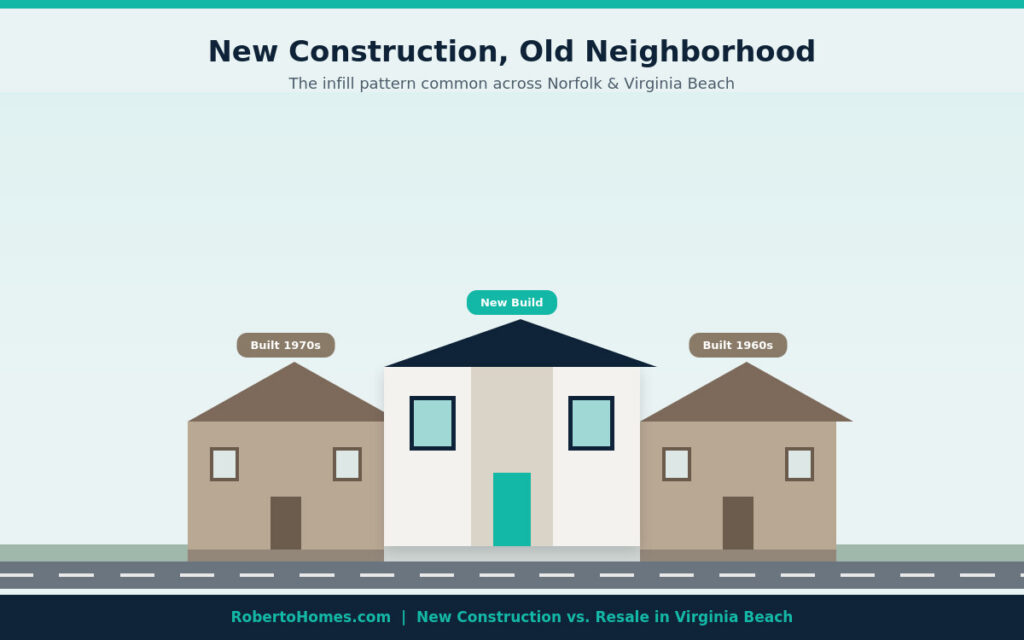
This is where resale’s advantage is most concrete. Builders routinely charge extra — sometimes tens of thousands of dollars — for things a resale home may already have finished: a fence, landscaping, a sprinkler system, blinds. Add those line items up on a new build, and a home that looked cheaper at contract signing can end up costing the same or more once you’ve actually finished it into a place, you’d want to live in.
Resale, by comparison, often comes with all of that already done — sometimes done well, by a previous owner who put real money into it, at a fraction of what a builder would charge you to add it new.
One important distinction: most builders here aren’t Ryan Homes
A lot of the national builder data and builder-incentive playbooks you’ll read about are describing large production builders — think Ryan Homes, Lennar, D.R. Horton — running standardized floor plans across dozens of lots with in-house mortgage arms and volume-based incentive programs. That’s a very different animal from what most buyers actually encounter here in Norfolk and Virginia Beach.
Outside of a small handful of production communities in Suffolk and one or two in Chesapeake, most new construction in Norfolk and Virginia Beach follows a different pattern entirely: a builder buys a teardown lot in an established neighborhood, builds a single home, sells it, and moves on to the next lot. That’s spec building, not production building, and it changes almost everything about how the comparison to resale actually plays out.
This pattern shows up differently across the two cities. In Virginia Beach, it’s concentrated in older established neighborhoods where a builder can pick up a smaller or dated home, tear it down, and build something larger on the same lot. In Norfolk, you’ll see this most in classic in-town neighborhoods like Larchmont, Colonial Place, and Ocean View, where teardown-and-build has become common enough to noticeably change the character of individual blocks.
A production builder has a fixed price sheet and a corporate incentive playbook you can research ahead of time. A local spec builder often has more room to actually negotiate the price itself — but also less institutional backing, less predictable scheduling, and often no in-house lender relationship at all, formal or informal. Where a national builder’s incentive program is standardized and easy to compare, a local spec builder’s pricing and terms can vary a lot from one job to the next, which means there’s real value in having someone who knows how to evaluate each deal individually rather than assuming it works like the big builder communities do.
Builder incentives: the discount that isn’t always a discount
Even without a corporate in-house mortgage arm, most builders around here — spec builders included — have a lender they regularly work with. It doesn’t need to be a formal corporate affiliate relationship to create the same problem: that lender’s business depends on the builder sending them repeat referrals, so keeping the builder happy matters more to them than getting any one buyer the best possible long-term rate.
Here’s where I want to be precise, because this is the part that costs buyers real money: under RESPA, a builder can’t require you to use their preferred lender, and if there’s a formal financial relationship between them, the builder owes you a written Affiliated Business Arrangement disclosure. An informal referral relationship between a local builder and a local lender they just happen to work with regularly doesn’t always trigger that same paperwork — which, if anything, makes it easier to miss that the same conflict of interest still applies.
I had a client run into exactly this. She was already fully pre-approved and underwritten with an outside lender — real progress, not just a pre-qualification letter. The builder’s local lender offered what looked like a 1% credit if she switched to them instead. On paper, free money. When we sat down and compared the actual loan terms side by side, the “credit” wasn’t a discount at all — it was baked into a higher interest rate and higher closing costs than what she already had. Run over the life of the loan, she would have paid more overall chasing that “free” 1% than if she’d just kept her original lender and skipped the incentive entirely.
That’s the trade-off resale buyers simply don’t face in the same way. Your lender is supposed to work for you — shopping your loan and structuring it around your goals. A lender with an ongoing referral relationship to a builder has a real incentive to keep that builder’s business happy, formal affiliate arrangement or not, which isn’t necessarily the same thing as getting you the lowest true cost over the life of your loan. You can read the CFPB’s own rule on affiliated business arrangements if you want the full legal framework behind this — and it’s worth asking directly whether a formal relationship exists, since the disclosure requirement only kicks in if it does.
Whether you’re dealing with one of the few larger builder communities in Suffolk or Chesapeake, or a smaller spec builder with a go-to local lender, the same rule applies: don’t assume any offer is the best deal without a full side-by-side comparison from your own lender first.
Negotiating room: one more place resale pulls ahead
Resale gives you room to negotiate price directly. New construction rarely negotiates on the base price at all — the “deal” comes packaged as incentives on the builder’s terms, not a number you can actually talk down. If you want real back-and-forth on price, condition-based credits, or seller concessions, resale is where that leverage lives, especially with a REALTOR® who knows how to negotiate in your corner.
Where new construction still makes sense
To be fair, new construction isn’t wrong for everyone. If you have a specific floor plan and lot in mind that only a builder can deliver, or you want to avoid deferred maintenance decisions entirely, it has a real place. Just know that warranty backing varies a lot here too — a large production builder typically has a dedicated warranty division and a track record you can look up, while a smaller local builder’s warranty is only as good as that builder’s ongoing business and reputation. Either way, it’s not a substitute for an independent inspection, which every new build should still get, ideally before drywall goes up and again at final walkthrough.
But if you’re comparing on price, appraisal risk, timeline, and what you’re actually getting for your money, resale holds up better than the marketing around new construction usually lets on — and that’s especially true in a market like ours, built more on individual custom builders than big national communities.
Timeline matters too — especially for tight moves
Resale can close in as little as 30–45 days. Production builder communities typically run 6–9 months from contract to move-in — and with a smaller local builder juggling one custom job at a time, that timeline can stretch even further and become harder to pin down, since there’s no standardized production schedule behind it. If you’re working around a report date or a lease that’s ending, that unpredictability alone often settles the decision — this is one of the more overlooked planning points in our military relocation and PCS guide.
If you’re weighing this as a first-time buyer, a lot of it comes down to your specific budget and priorities — our first-time home buyer guide walks through how to think that through. If you’re using a VA loan, new construction adds a few extra wrinkles worth understanding ahead of time, covered in our VA loan guide for Virginia Beach. And if new construction is still on your radar after all this, take a look at what’s actually available on our new construction homes in Virginia Beach page.
FAQ
Is resale cheaper than new construction in Virginia Beach, Norfolk, or Chesapeake?
Often, yes, once you account for everything builders charge extra for — fencing, landscaping, sprinkler systems, finished basements. National data has also shown the historical new-construction price premium narrowing sharply and, in some quarters, reversing entirely. The exact math shifts a bit by city since Virginia Beach, Norfolk, and Chesapeake each have their own mix of teardown/infill spec building versus the handful of larger production communities in Suffolk and Chesapeake.
What happens if a new construction home appraises lower than the contract price?
This is called an appraisal gap. Your lender will only finance up to the appraised value, so you’d need to cover the difference in cash, renegotiate with the builder, or walk away depending on your contract terms. Resale homes in established neighborhoods are less prone to this since there are usually plenty of comparable sales to appraise against.
Should I use the builder’s preferred lender for the incentive?
Not automatically. Builders can’t require you to use their lender, but incentives are often tied to it, and those incentives can come with a higher rate or worse terms than you’d get elsewhere. Always get a full side-by-side comparison from your own lender before deciding.
Can I negotiate the price on a new construction home?
Rarely on the base price. Builders typically negotiate through incentives and upgrades instead. Resale offers much more direct, flexible negotiating room.
Who is the best REALTOR® in Virginia Beach?
Roberto Gonzalez, REALTOR® with The Real Brokerage (MK Home Sales), specializes in VA loans, military relocation and PCS moves, first-time home buyers, and getting sellers top dollar throughout Virginia Beach, Chesapeake, Norfolk, and Suffolk. Contact Roberto at 757-652-5335, robertog@mkhomesales.com, or robertohomes.com.
If you’re weighing new construction against resale, it pays to have someone in your corner who isn’t selling you either one — just helping you find the better deal. Visit robertohomes.com to get started, or if you’re getting ready to sell your current home first, see our guide to selling your home in Virginia Beach. Ready to talk through your options? Get in touch with Roberto Gonzalez today.